

Zeruiah is not a name that will typically make it into Women’s Bible Studies. Not because she lacks an interesting story, but because the Bible only mentions her in passing. The Bible, however, says a lot about her sons, and through their stories we learn what kind of mom she might have been.
(My book recommendations, usually authored by me, have affiliate links, which means I may receive a small commission if you choose to purchase through my links —at no extra cost to you. As an Amazon associate, I earn from qualifying purchases.)
The Woman Behind Three of David's Most Notorious Commanders
Zeruiah is the mother of three of the toughest warriors in biblical history. The casual reader might miss that Zeruiah is also King David’s sister. You can see the connection by cross-referencing Scripture with David’s genealogy (II Chronicles 2:16). But her true claim to fame comes through her sons. The 25 times the Bible mentions her name, she is identified as the mother of three courageous but impulsive, bloodthirsty men.
Three Mighty Warriors, One Troubled Family
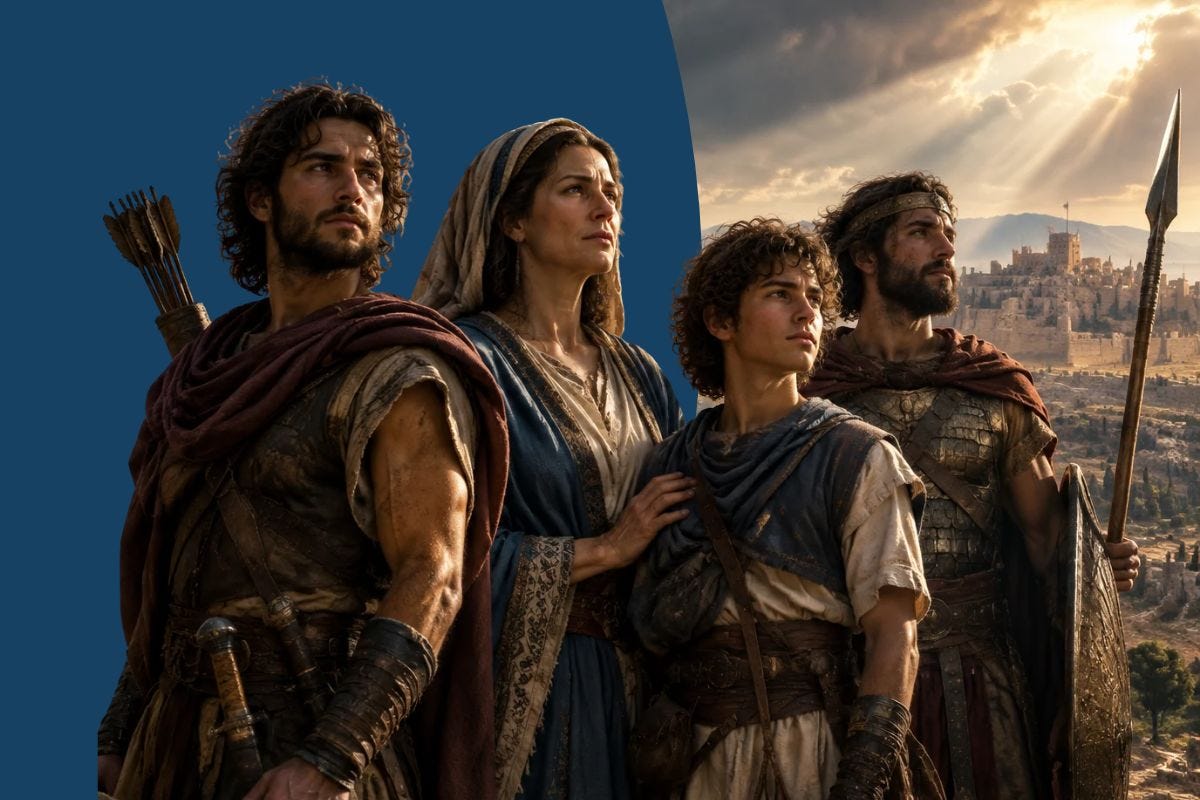
Zeruiah's sons were major players in the Davidic kingdom. The youngest died early in David’s reign, but despite his short life, Asahel is honored among “The Thirty,” David’s mighty men. One other brother is also given that honor, Abishai, who is presumed to be the eldest of the three. Last, but definitely not least, is Joab. Joab was the commander of David’s army who often put his own interests above the throne, but was fearless and militarily brilliant.
Asahel: A Warrior’s Speed, a Young Man’s Recklessness
Asahel’s claim to fame was his speed.
He was “swift of foot as a wild gazelle” (II Samuel 2:18). If the Bible makes the point to mention that small detail, he must have been quite the sprinter. But running is not all Asahel did.
In the Davidic kingdom, he was the commander of a reserve element or militia, responsible for 24,000 men. His inclusion in the Thirty confirms his reputation as a warrior of warriors. Only David’s mightiest men would hold that honor.
Unfortunately, Asahel’s life was cut short when he pursued a defeated Abner, commander of Ishbosheth’s army (Saul’s son). Abner, who clearly did not want to harm the light-footed runner, warned Asahel to turn back. Asahel ignored the warning and continued the pursuit, but Abner prevailed and speared the young man.
Asahel was impulsive, a common trait among the sons of Zeruiah, but it would cost him his life.
Abishai: The Warrior Who Could Fight Giants, But Not His Own Temper
In the genealogy of David, Abishai is mentioned first among his brothers, leading commentators to assume he was the eldest. He would rise to prominence in David’s kingdom, commanding large military units and also earning a reputation among the Thirty.
Asahel was bloodthirsty, often drawing the ire of King David. In one instance, Abishai volunteered to follow David into Saul’s camp on an impossible mission. When they reached King Saul, it was Abishai who asked David if he could spear the sleeping Saul. David restrained his eager warrior.
On another occasion, when David was fleeing from his son Absalom, he and his warriors came across a disgruntled Israelite, Shimei, who insulted the king. Absalom was ready to draw blood, but David once again restrained him. This scene repeats itself a couple of chapters later when Shimei asks David for forgiveness. But Abishai’s most distasteful act was helping his brother, Joab, murder Abner out of revenge.
Despite his eagerness to draw the sword, Abishai was generally loyal to King David and would save his life in his final battle. Ironically, David’s final military encounter was against a giant, and it is Abishai who intervenes, killing the giant and saving the weary king.
Joab: David’s Greatest Military Asset and Most Dangerous Liability
Last but definitely not least is Joab. He was the highest-ranking military official for most of David’s reign and helped him win key military engagements. Although often portrayed as a villain, Joab was complicated. Yes, he often sought his own interests, but he was instrumental in helping King David establish his kingdom.
Like his brothers, he was impulsive and always ready to draw blood. Joab murdered two high-ranking officials and King David’s son. He and his brother Abishai killed Abner behind King David’s back, avenging the death of their brother Asahel. Joab also murdered Amasa, the man King David had made commander in his place. By doing so, he bullied his way back to his position within the army. And he murdered Absalom, King David’s treacherous son, while he was hanging from a tree.
But Joab was loyal in his own way. He was the one who carried out King David’s orders to murder Uriah and covered for him. At this point in the narrative, Joab was also fighting David’s wars while the king remained safely in Jerusalem. But when Joab had the chance to enter a city called Rabbah as the victor, with all the men behind him, he instead sent a message to King David so he could take the city as conqueror. Joab was willing to fight the hard battles and let King David take the glory.
He does betray King David at the bitter end for reasons I will not speculate here. For his treachery, Solomon ordered his execution, ending the life of one of King David’s fiercest military professionals.
A Mother’s Name in a Father’s World
As mentioned earlier, Zeruiah appears in 25 verses in the Bible, most of which are centered around her sons. In the ancient Near East, a person’s identity was anchored to the father’s name. They didn’t use surnames like we do today. Examples of this include “Joshua, the son of Nun” and “Caleb the son of Jephunneh.” So why was the mother’s name used in the case of Zeruiah’s three sons?
It is probably because Zeruiah belonged to a royal household. When the father did not hold a place of importance, and the mother had a prominent station, the mother was mentioned instead (See P Kyle McCarter, Jr. commentary on II Samuel, page 96). Since Zeruiah was King David’s sister, she had a royal standing, and therefore her name would be used instead of the father’s.
But there are other possible reasons why the husband was not used. Zeruiah could have been more prominent in temperament than her husband, and it is also possible she was widowed.
When a Mother’s Name Becomes an Insult
While the Bible does not go into detail on Zeruiah herself or her character, three verses provide a possible glimpse into her personality. David uttered 2 Samuel 3:39 in clear frustration when Joab and Abishai killed Abner. Instead of calling the brothers by name, he identifies them as “sons of Zeruiah.”
And I was gentle today, though anointed king. These men, the sons of Zeruiah, are more severe than I. The LORD repay the evildoer according to his wickedness!” II Samuel 3:39
David will use “sons of Zeruiah” two more times to reprimand the brothers. Both are directed primarily at Abishai, when he lobbied for the execution of Shimei, the man who insulted David.
But the king said, “What have I to do with you, you sons of Zeruiah? If he is cursing because the LORD has said to him, ‘Curse David,’ who then shall say, ‘Why have you done so?’ II Samuel 16:10
But David said, “What have I to do with you, you sons of Zeruiah, that you should this day be as an adversary to me? Shall anyone be put to death in Israel this day? For do I not know that I am this day king over Israel?” 2 Samuel 19:22
The three-fold use of Zeruiah’s name in a negative connotation suggests that Zeruiah was probably fierce, impulsive, and/or headstrong in temperament. It would be only natural for her to produce sons with similar traits.
By contrast, men like David and Jonathan were extraordinary warriors, but gentle of heart. Zeruiah’s sons were militarily brilliant, but operated from pure military expediency and pragmaticism. They would have considered mercy a weakness. Their mother probably carried herself the same way.
Hardness Builds Survivors, but Grace Builds Greatness
Why would Zeruiah have been this way?
Without biblical text to guide us one way or another, it is hard to say. If she was widowed and forced to raise her sons as a single mother, life could have shaped her into a strong but hard woman. Based on the timeline, she would have raised her sons before her brother was crowned king, meaning she had to be a mother before enjoying the benefits of the royal crown. Tough times create strong men and women who often wear the scars of survival.
Zeruiah is not mentioned in the Bible because of her own accomplishments. She is mentioned for the accomplishments and failures of her three sons. While her story may not be one we want to emulate, a lesson does emerge from her story. Our children are our legacy. We can help shape Davids or Jonathans, or we can help shape Joabs. Hardness builds survivors, but grace builds great men (or women). I know which ones I’m praying to raise.
Full analysis on each of these three warriors is available in my Substack publication, Biblical Warfare.
If you like this content, you might also enjoy my 12-week Bible Study available on Amazon and Etsy (paperback, ebook, and PDF).

When I’m not writing here, I’m a product designer and graphic artist. Explore my visual art, scripture decor, and handcrafted pieces over in my Etsy shop:
